UniPure Process Technology
Patented iron co-precipitation for heavy metals removal.
The most efficient way to activate iron to indiscriminately remove heavy metals from water and wastewater — developed by the Science & Technology Division of Unocal.
- Part-per-billion effluent applications
- Multiple metal contaminants at once
- Highly variable loading rates
- Retrofits into existing systems
Why conventional treatment falls short
Hydroxide precipitation can only ever hit one metal’s sweet spot.
Alkaline precipitation follows a V-shaped solubility curve: too little base and metals stay dissolved, too much and they form soluble complexes and redissolve. Each metal bottoms out at a different pH — so with multiple metals, any operating pH is a compromise.
UniPure takes a different path. Metals are trapped inside dense iron solids, which behave like iron — not like the metals — so they don’t resolubilize as pH moves. That makes it possible to reach concentrations well below each metal’s thermodynamic solubility limit.
How it works
Two removal mechanisms working at once.
- 01 · Associate
Ferrous iron (Fe²⁺) forms soluble chain-like structures in the water. Heavy metals substitute into those chains, closely associated with the iron.
- 02 · Oxidize
In the UniPure Reactor’s reaction zone, pH is controlled to 7.8 and air is sparged to rapidly oxidize ferrous iron to ferric (Fe³⁺).
- 03 · Occlude
As iron drops out of solution it envelops the metals in a dense matrix. The solid behaves as an Fe³⁺ particle, so the metals can’t resolubilize.
- 04 · Adsorb & layer
Remaining metals adsorb onto high-surface-area ferric solids; new iron precipitates on top of them, sealing them in and building very dense solids.
What it means on site
Fewer steps, fewer chemicals, better solids.
No chromium reduction step
Hexavalent chromium acts as the oxidant, is reduced to trivalent chromium and removed along with the iron.
Works with chelated metals
The removal is more physical than chemical, so metals bound to chelators are enveloped and removed too.
Use any base
Removal depends only on iron chemistry, so choose the base that minimizes cost, solids or scaling.
Lower operating pH
Less base than systems running above pH 9, longer equipment life, and no final pH adjustment station.
Better clarification & dewatering
Denser, lower-charge solids carry less water — less settling area and easier filter pressing.
Leach-resistant solids
Entrapped metals can’t freely resolubilize, significantly improving leachability test results.
Configuration 1
UniPure
Mirrors a conventional treatment facility. Best where metals contamination is low or the water already carries a high background iron concentration.
Configuration 2
Unipolish
Polishes the effluent of an existing conventional system that isn’t meeting discharge standards — very effective at removing the metals that remain.
Support services
You hire UniPure to ensure compliance.
Know what you need? We’re ready to bid. Don’t know where to start? We bring the know-how to complement your EH&S staff or consultant.
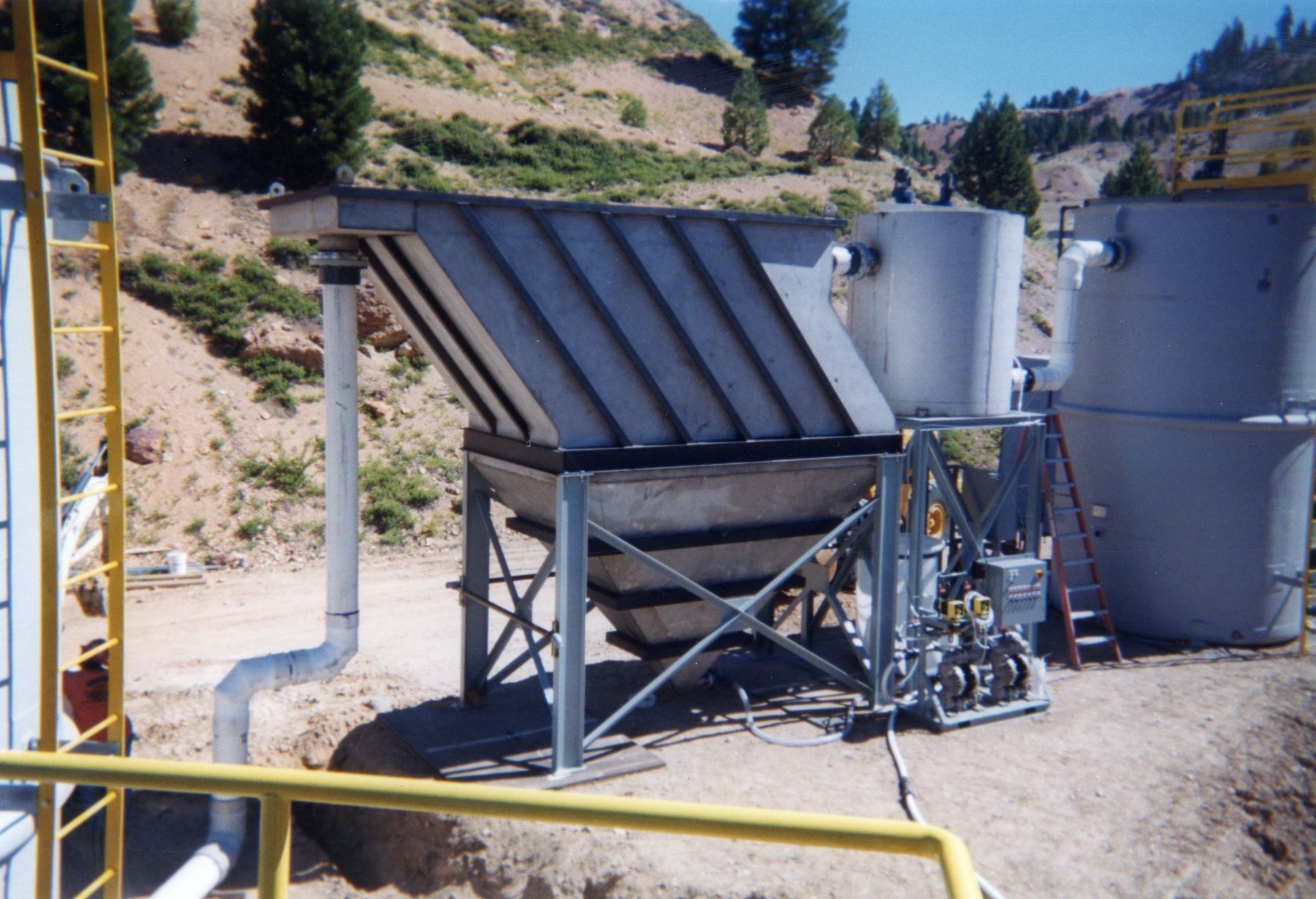
- 1Bench-scale testingTreatability tests prove the process can comfortably meet your effluent limits — the basis for a meaningful Process Guarantee.
- 2Pilot-scale testingIndustrial wastewater changes hour to hour. Our 4 gpm pilot units run on site the day they arrive.
- 3Design engineeringProcess chemistries and equipment specs become clear mechanical, electrical and process drawings.
- 4Project managementOur “internal ownership” program keeps the same engineering team with your project from proposal through acceptance.
- 5InstallationOff-loading, setting, piping, wiring and mechanical commissioning — any or all of it.
- 6Start-up & trainingOur on-site engineer runs the system to steady state, then trains your operators in the classroom and one-on-one.
Start with a treatability test.
Talk to an engineer